

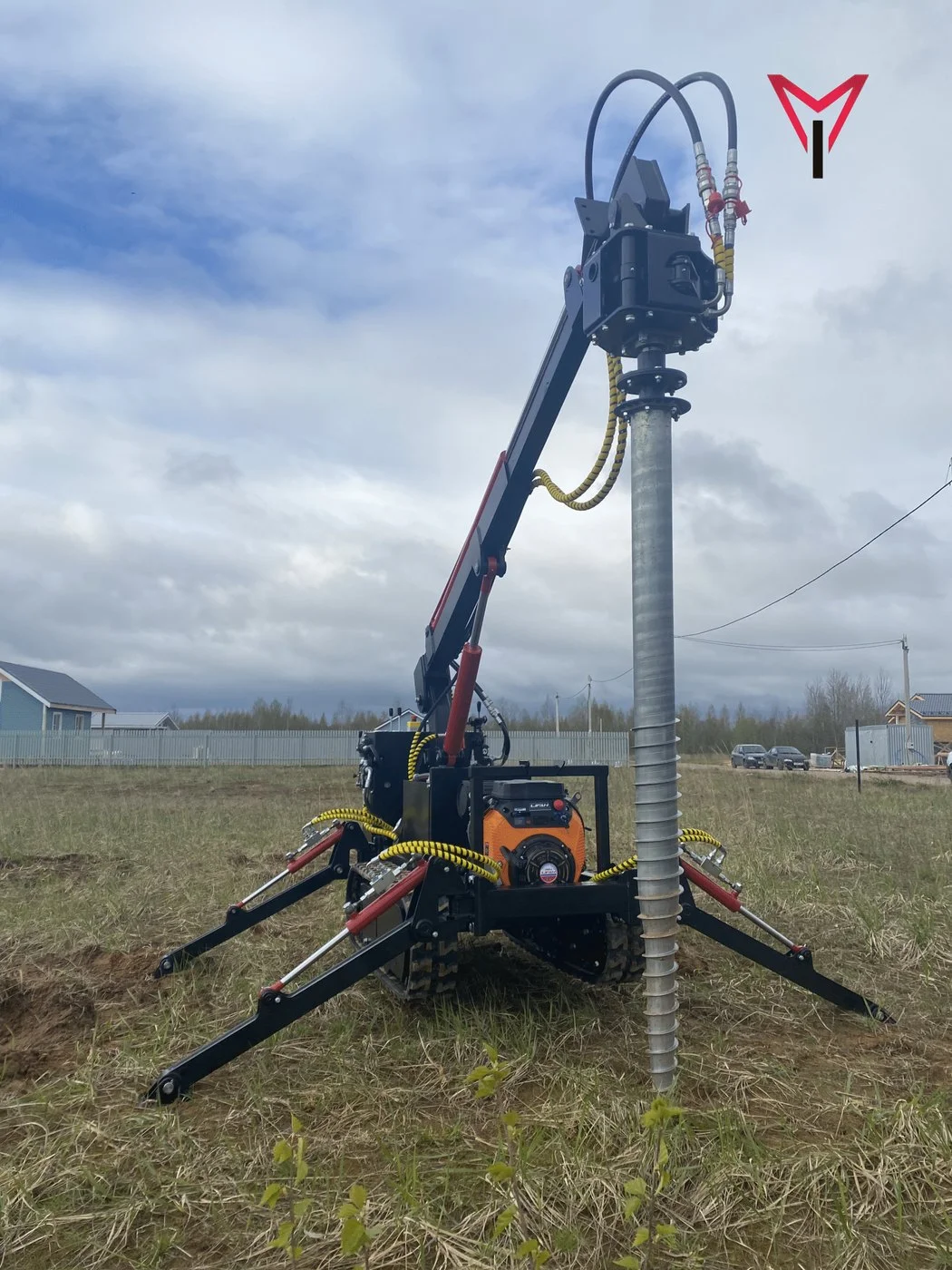
An operator watches the pressure gauge as a screw pile advances into the ground. The first metre presents little resistance, but the load increases noticeably as the pile reaches a denser soil layer. The hydraulic drive continues rotating, although its speed begins to fall. At this point, the installation crew needs to understand whether the changing resistance is expected, whether the equipment can safely continue and what the readings mean for the foundation.
Torque is one of the most useful parameters in screw pile installation, but it is also frequently misunderstood. A machine with a higher torque rating is not automatically more productive, and a high installation torque does not independently prove that a foundation has achieved its required load capacity. Contractors examining hydraulic equipment at https://iron-mechanics.com/product-category/ground-screw-drivers/ will encounter different installation systems whose suitability depends on much more than a single performance figure.
Understanding torque helps contractors choose equipment, recognise unusual installation conditions and communicate effectively with foundation engineers. It also helps distinguish between the mechanical capability of a hydraulic driver and the structural performance of the pile installed using that machine. These are related aspects of foundation construction, but they should never be treated as interchangeable.
What Installation Torque Actually Measures
Torque describes the turning effect of a force acting around an axis. In screw pile installation, it represents the rotational effort required to turn the pile as its helical plates and shaft interact with the surrounding ground. The measurement is normally expressed in newton metres (Nm), with larger values indicating greater rotational resistance or applied turning moment.
A screw pile advances through the combined action of rotation and axial force. Its helical plates are designed to move through the soil in a controlled manner, while the installation equipment provides the torque needed to overcome resistance. The relationship between rotation and penetration depends on the pile geometry, ground conditions and the operating procedure.
Resistance develops through several mechanisms. Soil acts against the helical plates as they advance, while friction and other interactions along the shaft may contribute to the required turning moment. The relative importance of these mechanisms varies according to the pile design and the materials encountered during installation.
Consider two screw piles with identical shaft diameters but different helix configurations. Their installation behaviour may differ because the helical plates engage different volumes of soil and create different patterns of resistance. Similarly, an identical pile may require different torque at two locations on the same construction site if the ground profiles vary.
Torque readings are therefore valuable observations of the installation process rather than universal indicators of ground strength. Their interpretation requires knowledge of the pile system, installation method and geotechnical conditions. Contractors should avoid drawing engineering conclusions from isolated readings without the appropriate design information.
Another important distinction concerns applied torque and the torque rating of the equipment. A hydraulic driver may be capable of producing a specified maximum turning moment, but the actual torque required during installation depends on the resistance encountered by the pile. A machine’s maximum rating should not be recorded or interpreted as the torque achieved at the foundation element.
How Ground Conditions Influence Torque
The ground beneath a construction site rarely behaves as a uniform material. Layers of sand, clay, silt, gravel and fill can occur at different depths, sometimes within a relatively small area. Each material interacts differently with a rotating screw pile, creating variations in the resistance encountered during installation.
Dense sand may generate considerable resistance as soil particles interact with the helical plates and shaft. Clay can behave differently depending on its consistency, moisture conditions and sensitivity to disturbance. Made ground may contain debris or isolated obstructions that cause abrupt changes in resistance. These differences explain why installation torque cannot be predicted reliably from pile dimensions alone.
The depth of installation also matters. A pile may advance relatively easily through a soft upper layer before encountering more resistant material below. The corresponding increase in torque may be consistent with the expected ground profile, but it still needs to be assessed against the project’s design and installation requirements.
Sudden changes are particularly important. An unexpected torque increase may indicate a dense soil layer, a buried obstruction or another condition affecting penetration. A reduction in torque can have several explanations, including entry into weaker material or changes in the way the pile interacts with the soil. Neither response should automatically be interpreted as confirmation of satisfactory installation.
The relationship between rotation and penetration offers additional information. If the pile turns without advancing at the expected rate, the surrounding ground may be disturbed rather than engaged in the manner assumed by the design. This behaviour can affect the reliability of installation observations and may require investigation.
Geotechnical information reduces uncertainty, but no ground investigation can guarantee that every local obstruction will be identified. Contractors should establish procedures for dealing with unexpected resistance before installation begins. Applying additional power without understanding the cause can damage equipment, deform pile components or produce an installation that does not meet the design requirements.
Hydraulic Pressure, Flow and Available Torque
Hydraulic ground screw drivers generate rotational motion through a motor supplied with pressurised hydraulic fluid. The pressure difference across the motor contributes to its torque output, while the volume of fluid flowing through it influences rotational speed. Motor displacement, gearing and mechanical efficiency determine how these hydraulic inputs translate into actual performance.
This distinction matters when comparing equipment specifications. A hydraulic system with a high maximum pressure does not necessarily provide greater useful torque than another system operating at a lower pressure. The motor and transmission arrangement must also be considered. Likewise, high hydraulic flow can support faster rotation, but speed alone does not establish the machine’s ability to overcome substantial installation resistance.
The power available from the hydraulic supply creates an additional limitation. Producing high torque at a high rotational speed requires more power than producing the same torque at a lower speed. A machine may therefore slow down when resistance increases, depending on its motor characteristics and hydraulic system configuration.
Contractors evaluating a driver should examine several connected specifications.
- Rated torque. The maximum or continuous turning moment available under the conditions defined by the manufacturer.
- Operating pressure. The hydraulic pressure required to achieve the specified performance without exceeding component limits.
- Hydraulic flow. The fluid delivery needed to operate the motor at an appropriate rotational speed.
- Motor and transmission design. The components that determine how hydraulic power is converted into rotational output.
- Duty cycle and cooling. The operating limitations that affect sustained performance under repeated or prolonged loads.
- Torque measurement. The method used to obtain and record actual installation torque, including any calibration requirements.
These specifications are especially important when a drive unit is powered by an excavator or an independent hydraulic power pack. The available pressure and flow must be compatible with the driver’s requirements. An otherwise suitable attachment may perform poorly if the carrier cannot provide the necessary hydraulic power.
Equipment manufacturers may publish several torque configurations for related machines. Contractors should establish which configuration corresponds to the quoted performance and whether additional components or operating conditions are required. Comparing maximum figures without this context can lead to inappropriate purchasing decisions.
The purpose of selecting sufficient torque capacity is to ensure that the machine can perform the specified installation without operating beyond its limits. Excessive capacity does not remove the need for correct alignment, controlled penetration or compliance with the pile manufacturer’s installation instructions.
Why Torque Does Not Equal Foundation Capacity
One of the more technically important aspects of screw pile construction is the relationship between installation torque and axial load capacity. Engineering methods have been developed to estimate the capacity of certain helical pile systems using measured installation torque and an appropriate correlation factor. These methods can be useful, but their application depends on the pile geometry, ground conditions and the validity of the selected correlation.
The underlying principle is that resistance encountered during installation can provide information about the interaction between the pile and the soil. However, the mechanisms governing installation resistance are not identical to those governing the foundation’s response to structural loads. A pile may experience significant rotational resistance without necessarily achieving the required axial performance.
Different pile systems can also produce different relationships between torque and capacity. Shaft dimensions, helix geometry, installation procedures and soil characteristics may influence the correlation. Factors established for one type of foundation element should not automatically be transferred to another.
The method of measuring installation torque is equally important. A hydraulic pressure reading can be used to estimate torque only when the relationship between pressure and drive output has been appropriately established. Mechanical losses, motor characteristics and the condition of the equipment can affect the result. An uncalibrated gauge should not be treated as a reliable foundation verification instrument.
The pile’s advancement during rotation can further influence the interpretation of torque. If the helical plates repeatedly disturb the same soil rather than advance through it as intended, the installation process may no longer correspond to the assumptions underlying the design method. The engineer must consider whether the recorded values remain suitable for capacity assessment.
Structural performance may require confirmation through calculations, specified installation criteria, load testing or a combination of methods. The appropriate procedure depends on the project and the foundation system. Contractors should follow the engineer’s requirements rather than substitute a general torque threshold for a properly established acceptance criterion.
This distinction also has commercial implications. Claiming that a particular driver can install foundations of a specified load capacity solely because it generates a certain torque would be misleading. The equipment supplies the mechanical force necessary for installation; the completed foundation’s capacity must be established through appropriate engineering assessment.
Selecting Equipment for the Required Torque Range
Choosing a hydraulic screw pile driver requires an understanding of the installation resistance anticipated for the project. Foundation drawings and geotechnical information provide the starting point, while the pile manufacturer’s requirements help establish the acceptable installation procedure. Equipment selection should be based on these technical demands rather than on the largest torque figure available in a catalogue.
The driver must be capable of installing the specified pile without exceeding its rated output. At the same time, the equipment should offer adequate operational control throughout the expected working range. A machine designed for substantially heavier installations may be unnecessarily costly or difficult to position on a small residential site.
Carrier compatibility can be decisive. An excavator-mounted drive may appear suitable based on its torque specification, but its performance depends on the excavator’s hydraulic circuit and the attachment arrangement. The carrier must also have an appropriate operating geometry and sufficient stability to manage installation loads safely.
Handheld systems may be appropriate for smaller ground screws where the expected resistance falls within their capabilities. Their portability can be valuable in restricted areas, although reaction forces and the complete hydraulic power arrangement must be considered. Larger piles or difficult ground may require equipment with more substantial mechanical support.
Self-propelled installation machines offer another approach when contractors need dedicated equipment for repeated foundation operations. Their value may come from the combination of torque capacity, positioning control and mobility between installation points. The machine’s overall suitability depends on project scale, transport requirements and working conditions.
Contractors should request clear technical documentation and, where practical, examine equipment operating under representative conditions. Published specifications establish the manufacturer’s stated capabilities, while demonstrations can reveal how conveniently the machine handles positioning, control and repeated installation tasks.
A suitable driver provides the necessary torque with an appropriate margin for the expected workload, without encouraging operation beyond the limits of the pile system or construction design. Its selection should also account for maintenance, operator training and the availability of technical support.
Monitoring Torque Throughout Installation
Torque monitoring is most useful when it forms part of a documented installation procedure. A single reading taken at the end of the operation may provide less information than a record showing how resistance changed with depth. The required measurement intervals and acceptance criteria should be established by the foundation engineer or the relevant pile system specification.
Installation records can help identify variations between foundation positions. If piles installed to comparable depths show significantly different torque behaviour, the results may indicate changes in ground conditions or installation performance. Such differences do not automatically establish a defect, but they can justify further examination.
Operators also need to recognise when work should stop. Unexpected resistance, abnormal drive behaviour, excessive vibration or an inability to achieve the specified penetration may indicate a problem. Continuing without assessment can increase the risk of equipment damage or an unacceptable foundation installation.
Reliable records depend on consistent measurement procedures. Gauge readings, calculated torque values and direct measurement systems should not be treated as equivalent unless their accuracy and calibration have been established. The method used to obtain the figures should be clear to anyone reviewing the installation documentation.
Communication between the installation crew and the foundation engineer is particularly important when site conditions differ from expectations. Operators can describe the actual behaviour of the pile and equipment, while the engineer determines whether the design assumptions remain valid. This division of responsibilities helps prevent operational decisions from being mistaken for structural verification.
Torque is valuable because it provides information about a process that largely takes place below ground, beyond direct observation. Its usefulness increases when measurements are accurate, recorded consistently and interpreted in the context of the foundation design. Contractors who understand these limitations can make better equipment decisions, respond more effectively to difficult ground conditions and maintain a stronger connection between installation practice and engineering requirements.